ParentVibes

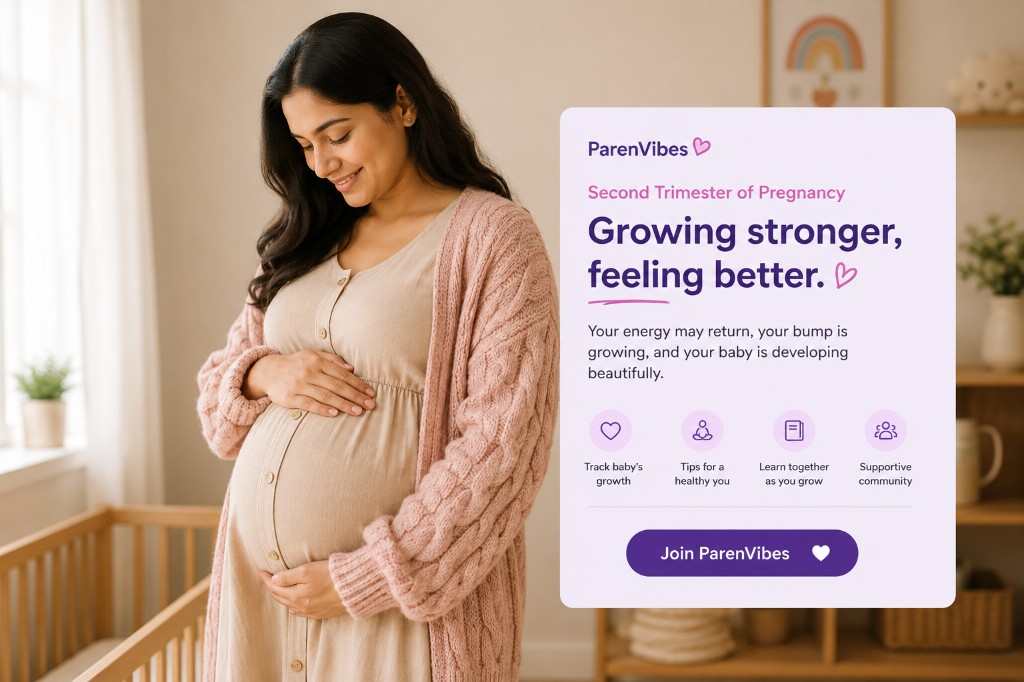
Second trimester of pregnancy — growing stronger, feeling better with Parent Vibes

Second Trimester of Pregnancy

By ParentVibes · Updated June 2026 · General information only — not medical advice.

Found this helpful? Share it 💛

WhatsAppFacebookX

Key Highlights for the Second Trimester

The second trimester is a period of tremendous growth — for you and baby. Your bump will pop in the coming weeks, and you'll soon start feeling baby move. Many people experience a welcome boost in energy, though new symptoms can appear too: heartburn, leg cramps, nasal congestion, and stretch marks, to name a few. Meanwhile, baby starts to look more like a tiny newborn — bones harden, lungs develop, and those gentle flutters turn into hearty kicks. Keep up with prenatal appointments; the mid-pregnancy anatomy scan around week 20 and glucose screening between weeks 24 and 28 are especially important this trimester.

How Long Is the Second Trimester?

The second trimester runs from week 14 through week 27 — often called the honeymoon stage of pregnancy. Morning sickness and extreme exhaustion frequently ease, your uterus rises above the pelvis, and a visible bump usually appears. It's a sweet window for gentle preparation, movement you enjoy, and connecting with your growing baby. Use our week-by-week guides to follow each stage from week 14 onward.

Pregnancy Week by Week

Select your week below to track each stage of your second trimester.

Week 14

About the size of a lemon

Welcome to the second trimester — often the most comfortable stretch. Welcome to the second trimester, a phase many p…

Full guide includes baby development, symptoms, nutrition, FAQs, and listen-along audio.

Read full week 14 guide →

Size comparisons are playful approximations and every pregnancy is different. This is general information, not medical advice — your doctor or midwife is your best guide.

Second Trimester · Weeks 14–27

Tap any week for the full guide — development, symptoms, nutrition, FAQs, and listen-along audio.

Week 14

About the size of a lemon

Welcome to the second trimester — often the most comfortable stretch. Welcome to the second trimester, a phase many p…

Read full guide →

Week 15

About the size of a orange

Baby can sense light and is practising tiny movements. Week 15 often feels quieter on the outside, but the baby is be…

Read full guide →

Week 16

About the size of a avocado

Little facial muscles allow squints and frowns; you may feel first flutters soon. Week 16 is exciting because first f…

Read full guide →

Week 17

About the size of a turnip

Baby is growing stronger and building a little fat layer. The baby is growing into more strength this week, and pregn…

Read full guide →

Week 18

About the size of a bell pepper

Hearing is developing — baby may start to hear muffled sounds. Week 18 brings a lovely sensory milestone because the…

Read full guide →

Week 19

About the size of a mango

A protective coating forms on baby's skin. You are getting close to the halfway point, and many parents begin feeling…

Read full guide →

Week 20

About the size of a banana

Halfway there! The mid-pregnancy scan often happens around now. Halfway there is a big emotional milestone, and week…

Read full guide →

Week 21

About the size of a carrot

Movements are getting stronger and more regular. After the big scan week, pregnancy often settles into a rhythm where…

Read full guide →

Week 22

About the size of a spaghetti squash

Baby looks more like a tiny newborn now, with lips and eyebrows. Week 22 is one of those weeks when the baby starts l…

Read full guide →

Week 23

About the size of a grapefruit

Baby is putting on weight and the lungs are developing. The baby is growing more resilient week by week now, and that…

Read full guide →

Week 24

About the size of a corn cob

Baby's face is fully formed and skin is becoming less see-through. Week 24 can feel like the true beginning of the la…

Read full guide →

Week 25

About the size of a cauliflower

Baby is responding to your voice and to sounds outside. Week 25 is often a sweet bonding week because the baby respon…

Read full guide →

Week 26

About the size of a lettuce

Eyes begin to open and baby takes practice 'breaths' of fluid. There is a wonderful sense of activity in week 26 beca…

Read full guide →

Week 27

About the size of a cabbage

The second trimester wraps up; baby's brain is very active. You are wrapping up the second trimester, and week 27 oft…

Read full guide →

Second Trimester Symptoms

Curious about baby kicks? Read week 20 →

The second trimester is sometimes referred to as the honeymoon stage of pregnancy. Many of the toughest early symptoms — like morning sickness and deep exhaustion — often fade, and you might finally start feeling like yourself again. Of course, every body is different; some people still feel unwell. Either way, you may notice new or returning symptoms in the weeks ahead, including:

Heartburn

Acid reflux and heartburn often ramp up in the second trimester, when the uterus moves out of the pelvis and hormones relax the valve between your stomach and oesophagus. It is uncomfortable but usually manageable with smaller meals, avoiding trigger foods (spicy sauces, citrus, very fatty meals), and remedies your provider approves.

Stretch marks

As your bump grows, skin stretches quickly — sometimes leaving stretch marks when collagen and elastin fibres tear. They are normal, common, and harmless. Keeping skin moisturised may help comfort; many fade after birth.

Linea nigra and other skin changes

A dark line down the centre of your bump is called the linea nigra. Pregnancy hormones can also cause darker patches on the face (melasma). These changes usually fade after delivery — nothing to worry about.

Leg cramps

Painful calf cramps, often at night, are common in the second and third trimesters. Staying hydrated, gentle stretching before bed, and moving regularly during the day may help. Mention persistent or severe cramps to your provider.

Nasal congestion

Pregnancy rhinitis — a stuffy or runny nose without a cold — affects many people in mid-pregnancy because of increased blood flow and hormone shifts. Saline rinses, humidifiers, and rest often bring relief; ask before using decongestants.

Baby Development in the Second Trimester

Baby develops by leaps and bounds during the second trimester. Bones harden, lungs mature, and tiny toenails, fingerprints, and footprints form. Limb movements become more coordinated — those early flutters you feel will turn into kicks and elbow jabs. Around 16 weeks, baby can start hearing muffled sounds, so talking or singing to your bump is a lovely habit. By the mid-pregnancy anatomy scan (often near week 20), you may see baby sucking a thumb or moving on screen.

What to Avoid During the Second Trimester

Most of the same safety rules from the first trimester still apply — with a few extra notes on exercise and comfort now that your bump is growing.

  • Smoking, drugs, and alcohol. Smoking, recreational drugs, and alcoholic drinks remain off the table for the rest of pregnancy.
  • Certain foods. Continue avoiding raw or undercooked meat and seafood, unpasteurised cheese and juice, high-mercury fish, unwashed produce, and deli meats unless heated until steaming. Caffeine in moderation (under about 200 mg per day — roughly one regular cup of coffee) is generally considered okay.
  • Risky exercise and positions. If energy has returned, gentle exercise is wonderful — but skip contact sports, heavy lifting, activities with a high fall risk (downhill skiing, horseback riding), hot yoga, and long periods lying flat on your back, which can reduce blood flow to baby.
  • Hot tubs and saunas. Soaking in very hot water raises core body temperature and is best avoided throughout pregnancy.

Frequently Asked Questions

Second Trimester

Just as one question gets answered in pregnancy, another pops up. Here are three common second-trimester questions — always reach out to your doctor or midwife for personalised advice.

A: Those first gentle flutters — called quickening — often appear between 18 and 20 weeks in a first pregnancy, sometimes earlier if you've been pregnant before. Movements grow stronger week by week. If you haven't felt anything by around 24 weeks, or if movements suddenly slow, contact your provider.

When to Reach Out to Your Doctor in the Second Trimester

The second trimester is often more comfortable, but aches and odd sensations are still normal. Mild discomfort is expected; sudden severe pain is not. Contact your provider promptly for intense cramping, bleeding, or fluid leaking from the vagina — these can signal complications. Your care team will also screen for conditions such as preeclampsia (high blood pressure with protein in urine). Try not to fixate on worst-case scenarios; focus on rest, nourishment, and keeping your appointments.

Second Trimester Checklist

  • Start a healthy, moderate exercise routine if you haven't already
  • Begin sleeping on your side — the safest position for baby
  • Invest in comfortable maternity clothes
  • Tell your workplace about your pregnancy
  • Draft or update your will
  • Start researching childcare options
  • Browse baby names and essentials lists
  • Attend all prenatal appointments, including the mid-pregnancy ultrasound (~20 weeks) and glucose screening (24–26 weeks)

More About the Second Trimester

Baby Essentials & Planning

View all baby essentials

The second trimester is a lovely time to think about what baby will need — without rushing. Browse calm guides and tools to help you plan thoughtfully.

You don't have to do this alone 💛

Join our warm WhatsApp community of parents and parents-to-be — share the wins, the worries, and everything in between.

Join the WhatsApp community