ParentVibes

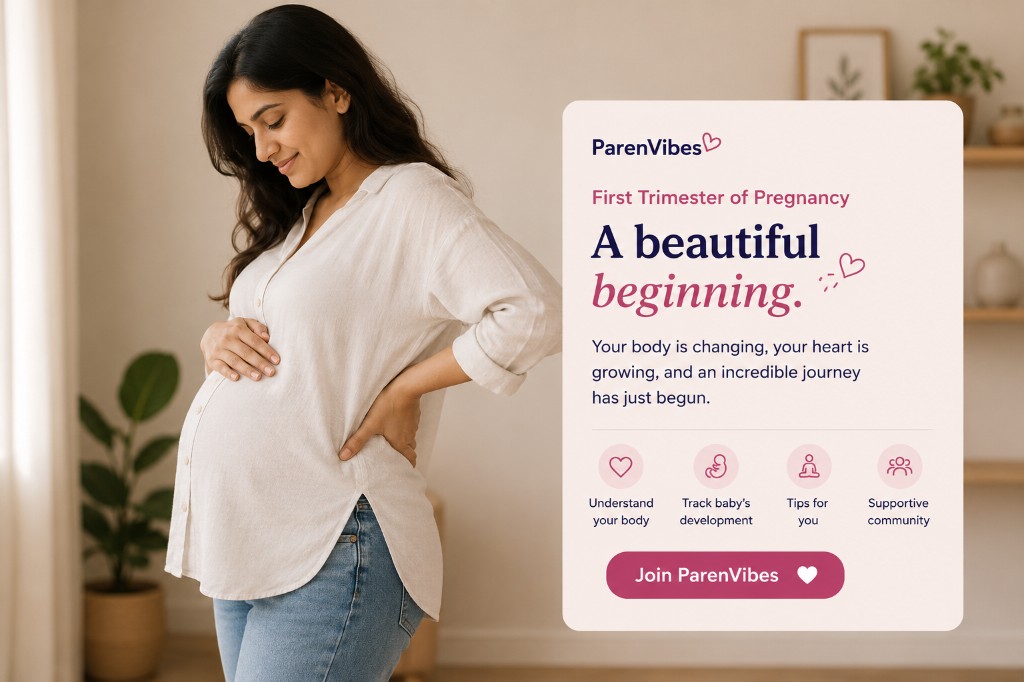
First trimester of pregnancy — a beautiful beginning with ParentVibes

First Trimester of Pregnancy

By ParentVibes · Updated June 2026 · General information only — not medical advice.

Found this helpful? Share it 💛

WhatsAppFacebookX

Key Highlights for the First Trimester

The first trimester is an emotional rollercoaster filled with moments of joy, anxiety, excitement and dread. And the physical changes are just as intense — from extreme exhaustion and morning sickness to constipation and sore breasts. It might feel like the first trimester stretches on for an eternity, but in reality it starts on day one of your last menstrual period and extends through week 13, day 6. Hang in there — many people find the second trimester brings a welcome energy boost.

How Long Is the First Trimester?

It might feel like the first trimester stretches on for an eternity, but in reality it starts on day one of your last menstrual period and extends through week 13, day 6. That means by the time you get a positive pregnancy test, you're already considered four or more weeks pregnant. Your estimated due date is calculated from the first day of your last period — so the first trimester is roughly the first three months of pregnancy.

Pregnancy Week by Week

Select your week below to track each stage of your first trimester.

Week 8

About the size of a raspberry

Fingers, toes, and tiny facial features start to take shape. Week 8 often feels like a practical turning point becaus…

Full guide includes baby development, symptoms, nutrition, FAQs, and listen-along audio.

Read full week 8 guide →

Size comparisons are playful approximations and every pregnancy is different. This is general information, not medical advice — your doctor or midwife is your best guide.

First Trimester · Weeks 1–13

Tap any week for the full guide — development, symptoms, nutrition, FAQs, and listen-along audio.

Week 1

Just the beginning

Pregnancy is counted from the first day of your last period, so week 1 is before conception. Week 1 can feel abstract…

Read full guide →

Week 2

A tiny spark

Your body is preparing to release an egg; conception usually happens around the end of this week. Your body is moving…

Read full guide →

Week 3

About the size of a a cluster of cells

A fertilised egg becomes a tiny ball of cells and begins its journey to the womb. If conception happens this week, th…

Read full guide →

Week 4

About the size of a poppy seed

The embryo settles into the womb lining; a positive test may show around now. Implantation is often happening around…

Read full guide →

Week 5

About the size of a sesame seed

The tiny heart and basic structures begin to form. This is one of the most active early-building weeks, even if from…

Read full guide →

Week 6

About the size of a lentil

A flickering heartbeat may be detected on an early scan. Week 6 is memorable because an early scan may pick up a flic…

Read full guide →

Week 7

About the size of a blueberry

Little limb buds appear and the brain is developing fast. There is a lot of visible shaping happening now, even if yo…

Read full guide →

Week 8

About the size of a raspberry

Fingers, toes, and tiny facial features start to take shape. Week 8 often feels like a practical turning point becaus…

Read full guide →

Week 9

About the size of a grape

The embryo is now called a foetus and is moving (though you can't feel it yet). One lovely milestone this week is tha…

Read full guide →

Week 10

About the size of a strawberry

Vital organs are formed and beginning to function. Week 10 is a reassuring milestone because the basic organ systems…

Read full guide →

Week 11

About the size of a fig

Tiny tooth buds and nail beds are forming. Week 11 often feels like a bridge between the roughest early symptoms and…

Read full guide →

Week 12

About the size of a lime

Reflexes are developing; the riskiest early phase is easing. Week 12 is a landmark week because dating or nuchal scan…

Read full guide →

Week 13

About the size of a pea pod

Fingerprints are forming and the body is catching up with the head in size. You are closing out the first trimester,…

Read full guide →

First Trimester Symptoms

Not sure if you're pregnant? See early signs →

The early weeks and months of pregnancy can be physically and emotionally taxing. Those first trimester hormones are no joke — they can leave you feeling exhausted, nauseous and weepy, sometimes all before you've even told anyone you're expecting.

Morning sickness

Got that queasy feeling in your tummy? Retching or vomiting is a common affliction in early pregnancy, affecting anywhere from 50 to 90 percent of moms-to-be. It's thought to be linked to rising hCG hormones. Despite the name, morning sickness can strike at any time of day. Small, frequent meals and a prenatal vitamin taken with food can help. If you can't keep anything down, call your provider.


Bloating and constipation

Well before that adorable bump appears, you'll feel like your belly has expanded. But in the early weeks of pregnancy, that's not baby — that's just bloat. Progesterone relaxes smooth muscle throughout your body, including your gastrointestinal tract, which slows digestion and can cause gas, bloating and constipation. Stay hydrated and eat plenty of fibre.

Sore breasts

Tender, swollen breasts are often one of the earliest signs of pregnancy. Hormonal surges and increased blood flow can make your breasts feel sore and heavy. Other breast changes — darkening areolas, visible veins — are normal and usually ease as your body adjusts.

More About First Trimester Symptoms

Learn more: pregnancy symptoms →

Ready to go beyond the basics? Here you'll find the latest data, expert insight and proven advice on pregnancy symptoms you may encounter — from everyday side effects to the more uncommon ones that may take you by surprise.

Baby Development in the First Trimester

You may not look pregnant yet, but your body is working overtime. Over the first 13 weeks, a veritable seed grows into a tiny human with organs and systems — lungs, heart, brain, liver, spine, limbs and genitalia. Facial features, toes and fingernails all take shape. By the end of the first trimester, baby has a heartbeat you can often hear on ultrasound, and the risk of miscarriage drops significantly.

What to Avoid During the First Trimester

There are a few hard rules to follow in the coming weeks to keep you and baby as safe as possible.

  • Smoking and recreational drugs. If you smoke, now is the time to quit. Avoid marijuana and other recreational drugs — none are considered safe in pregnancy.
  • Alcohol. No amount of alcohol is considered safe during pregnancy. Skip alcoholic beverages entirely.
  • Certain foods. Food-borne illness can be especially dangerous now. Avoid foods like raw or undercooked meat, fish and eggs; unpasteurised cheese and juice; high-mercury seafood; unwashed vegetables; and deli meats unless heated until steaming. Caffeine in moderation (up to about 200 mg a day) is generally considered okay.
  • Certain chemicals and ingredients. Check labels on skincare and beauty products and cleaning supplies. Avoid toxic paint fumes, and have someone else change the kitty litter if possible (risk of toxoplasmosis).
  • Hot tubs, saunas and steam rooms. Skip activities that raise your core body temperature above about 102°F (38.9°C). Overheating in early pregnancy is linked to increased risk of neural tube defects.

Frequently Asked Questions

First Trimester

Pregnancy is chock full of "what ifs" and nagging questions. Here, we break down a few of the most common first trimester inquiries:

A: Yes — don't be surprised if you experience some mild discomfort, similar to menstrual cramps early in pregnancy. It's possible you might even feel this before your missed period; it could be implantation cramps (when the egg burrows into your uterus). Your uterus is rapidly growing throughout the first trimester, which can cause a pulling, stretching or cramping sensation. If abdominal pain is severe or accompanied by heavy bleeding, reach out to your doctor right away.

First Trimester Checklist

More About the First Trimester

Pregnancy Safety

View all pregnancy safety articles →

As baby grows in your belly, you'll want to take the proper precautions to make sure you and baby are safe and healthy. Explore our guides below to learn everything you need to know about pregnancy safety in the first trimester and beyond.

You don't have to do this alone 💛

Join our warm WhatsApp community of parents and parents-to-be — share the wins, the worries, and everything in between.

Join the WhatsApp community