
Feeding
Baby Feeding Essentials (2026): Bottles, Sterilisers & More
Bottles, teats, sterilisers, and feeding-time helpers — how to choose the right gear for bottle or combination feeding, and what's actually worth buying.
Parent Vibes is reader-supported. Some links on this page are affiliate links — if you buy through them we may earn a small commission, at no extra cost to you. We only recommend products we'd genuinely suggest to a friend.
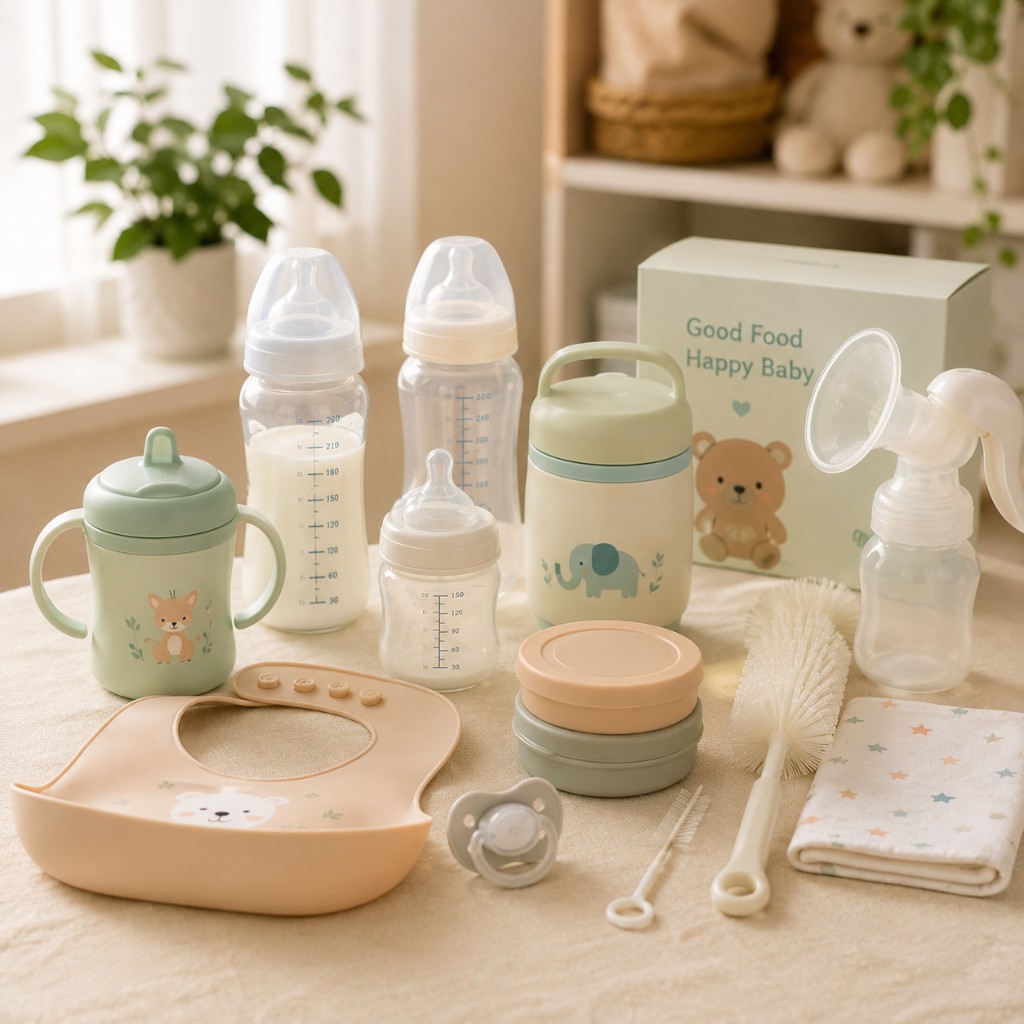
Whether you're bottle-feeding, combination feeding, or just want a few bottles on hand, the choices can feel endless. Here's a simple guide to the feeding gear that genuinely helps in the early months — what to buy, what each thing does, and roughly what it costs in India.
How to choose baby bottles
- Start small: buy 2–3 bottles before committing — babies can be fussy about teats.
- Anti-colic vents reduce the air baby swallows, which means less gas and spit-up.
- Match the teat flow to age: slow-flow for newborns, faster flow as they grow.
- Wide-neck bottles are easier to clean and fill; check parts are BPA-free.
Feeding essentials to consider
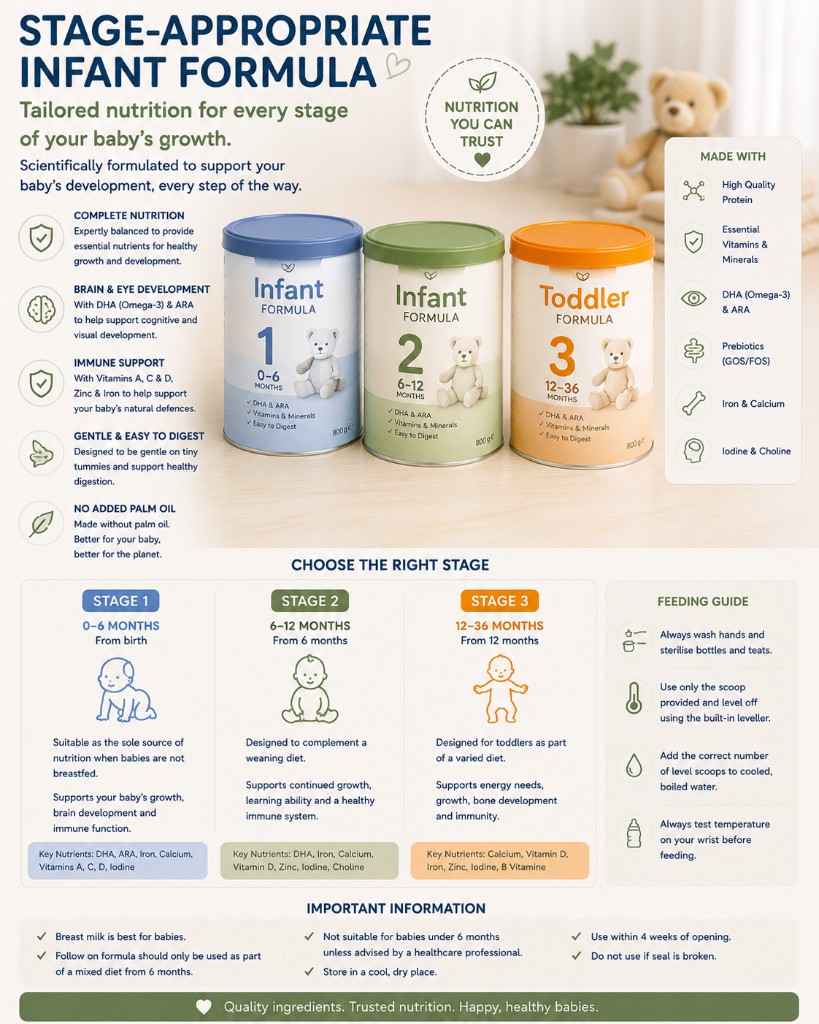
Stage-appropriate infant formula
If you bottle-feed or combination-feed, pick a stage-1 infant formula suited to your baby's age. Always follow the mixing instructions on the tin exactly, and ask your paediatrician which formula is right for your baby.
Typical range: ₹400 – ₹1,500
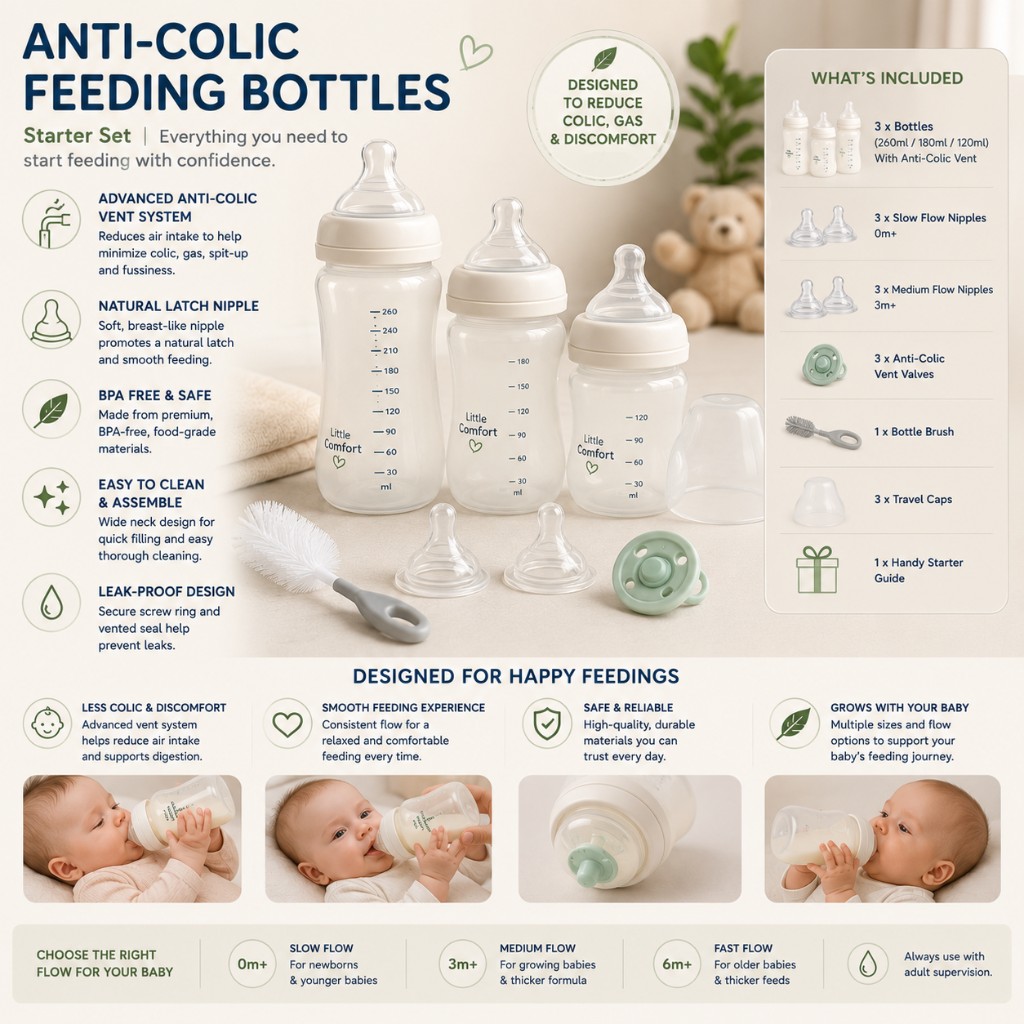
Anti-colic feeding bottles (starter set)
The core of bottle feeding. Anti-colic vents and a slow-flow newborn teat keep feeds calm and reduce gas. Buy a small set first, then stock up on the one baby likes.
Typical range: ₹500 – ₹2,000
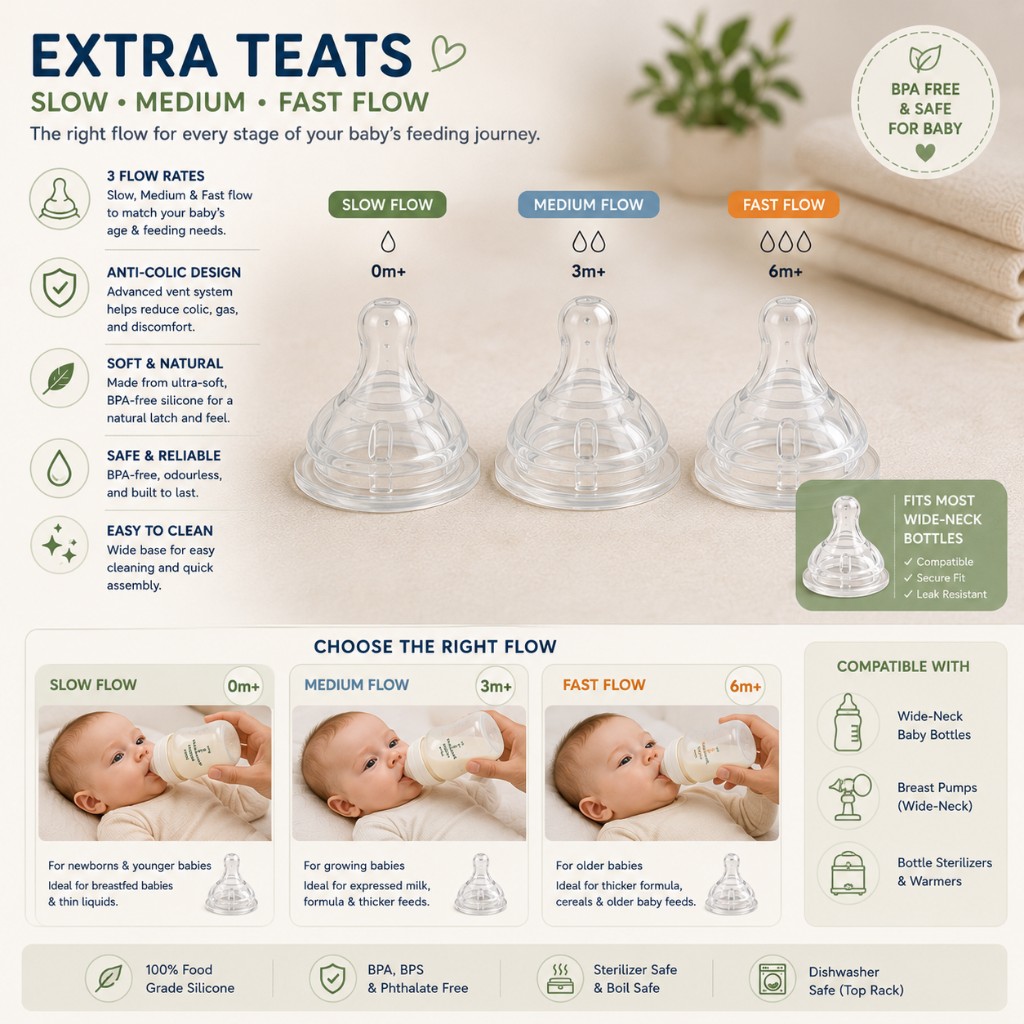
Extra teats (slow / medium / fast flow)
Teats wear out and baby's flow needs change every few months. Keep the next size ready so feeds don't get frustrating.
Typical range: ₹200 – ₹700
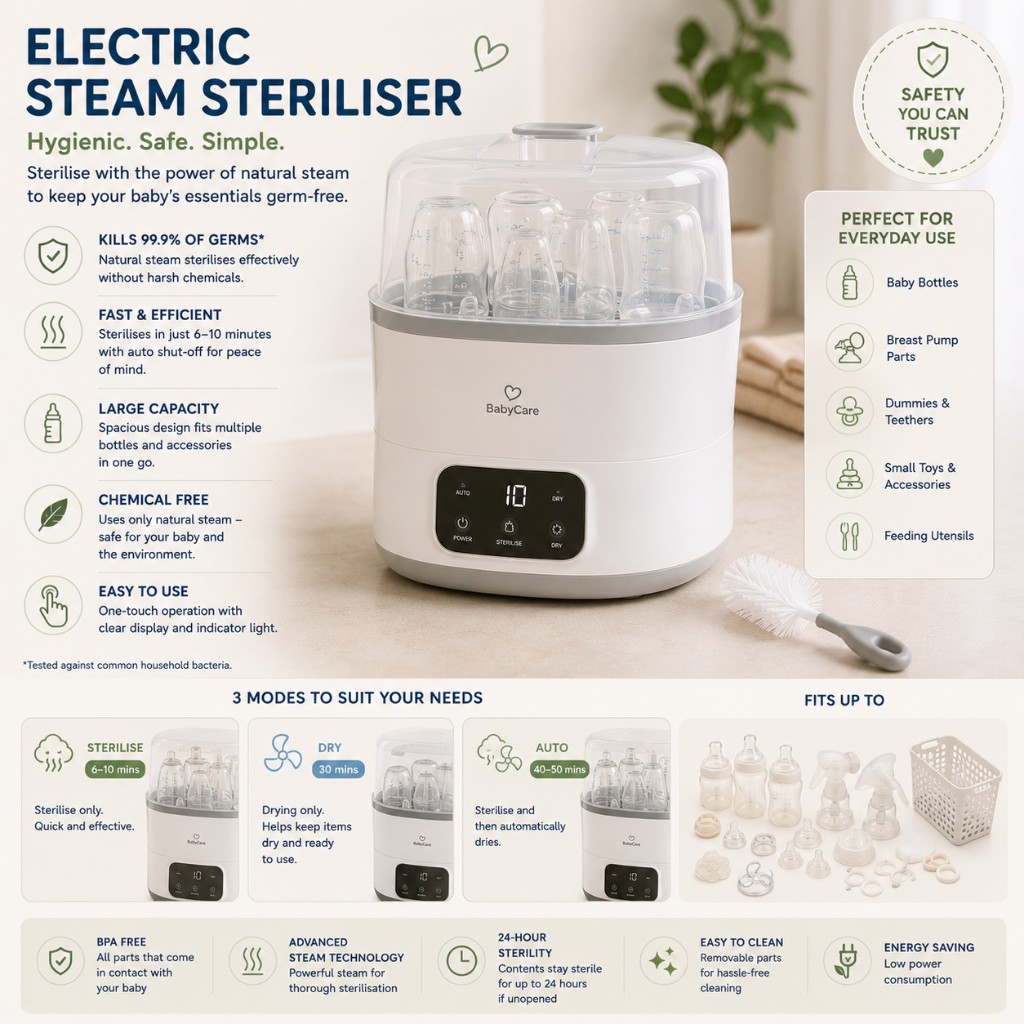
Electric steam steriliser
Kills germs on bottles, teats, and pump parts in minutes — much easier than boiling pans. An electric steam unit does a full set at once.
Typical range: ₹2,000 – ₹6,000
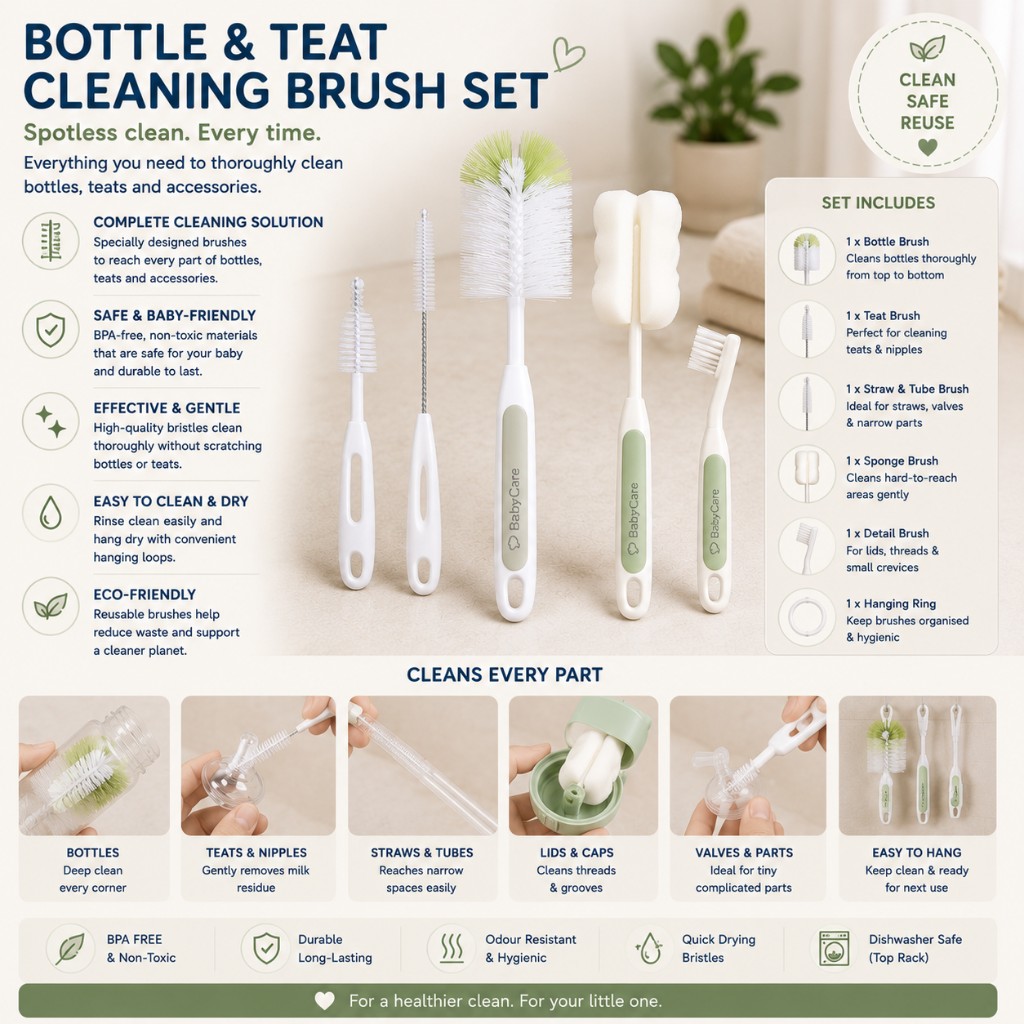
Bottle & teat cleaning brush set
A proper bottle brush plus a small teat brush gets into corners regular sponges miss — essential for hygienic feeds.
Typical range: ₹150 – ₹600
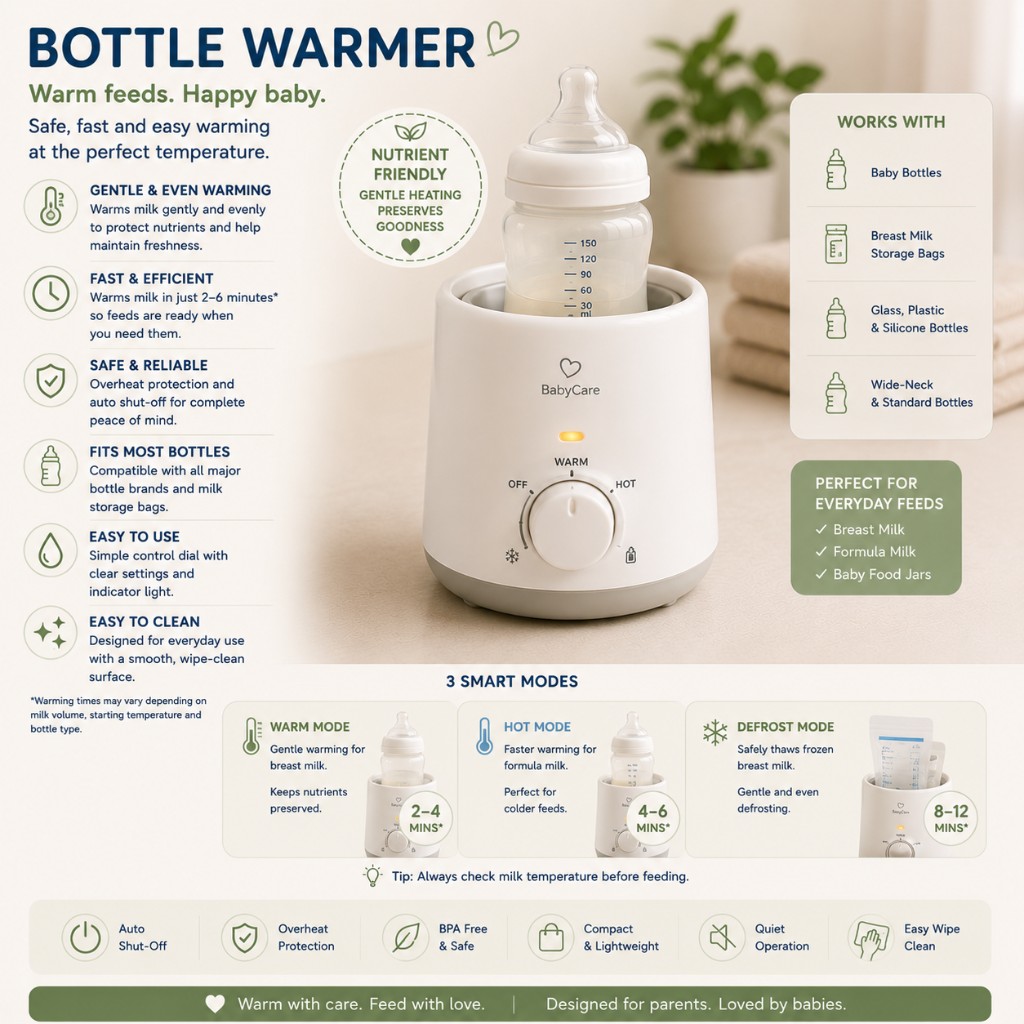
Bottle warmer
Warms milk gently and evenly to body temperature — handy for night feeds and far safer than a microwave (which creates hot spots).
Typical range: ₹1,500 – ₹4,500
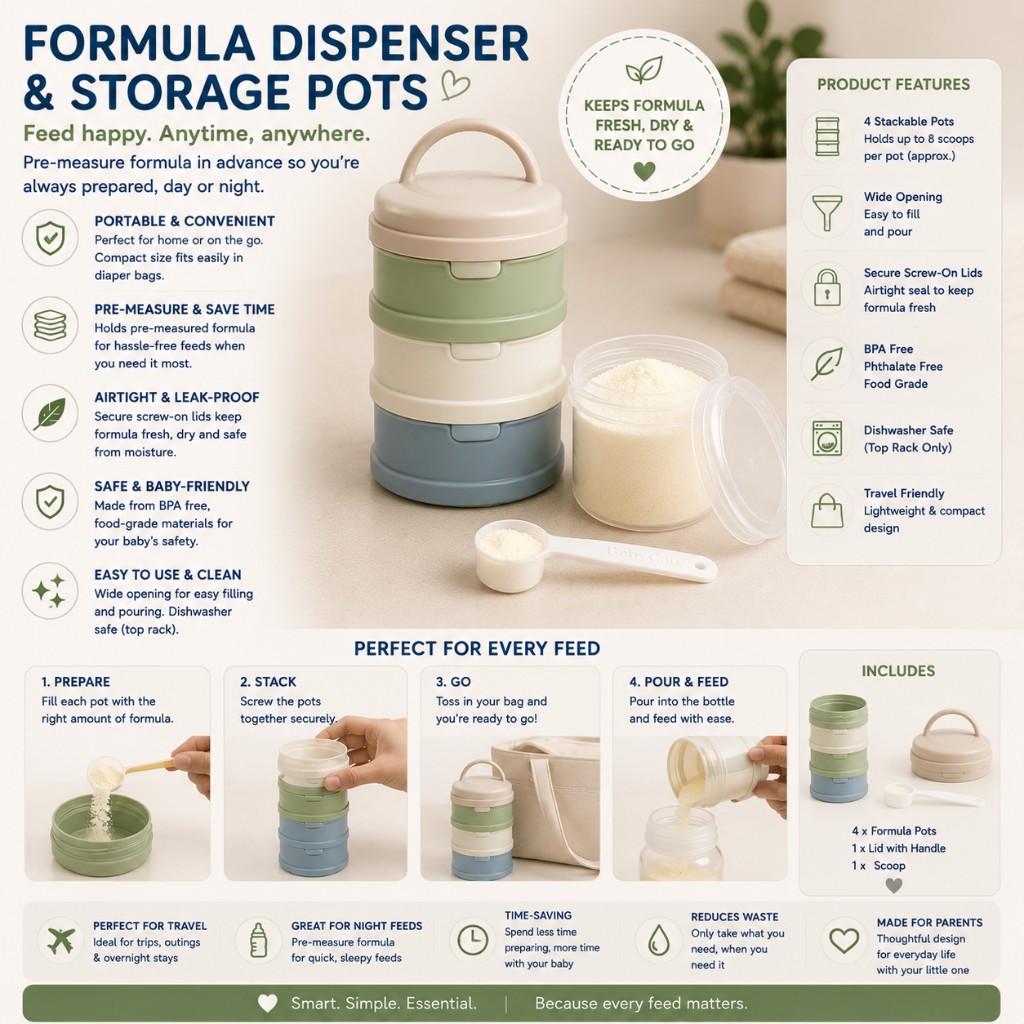
Formula dispenser / storage pots
Pre-measured compartments let you make a bottle fast when out and about or half-asleep at 3am. Cheap and surprisingly useful.
Typical range: ₹200 – ₹800
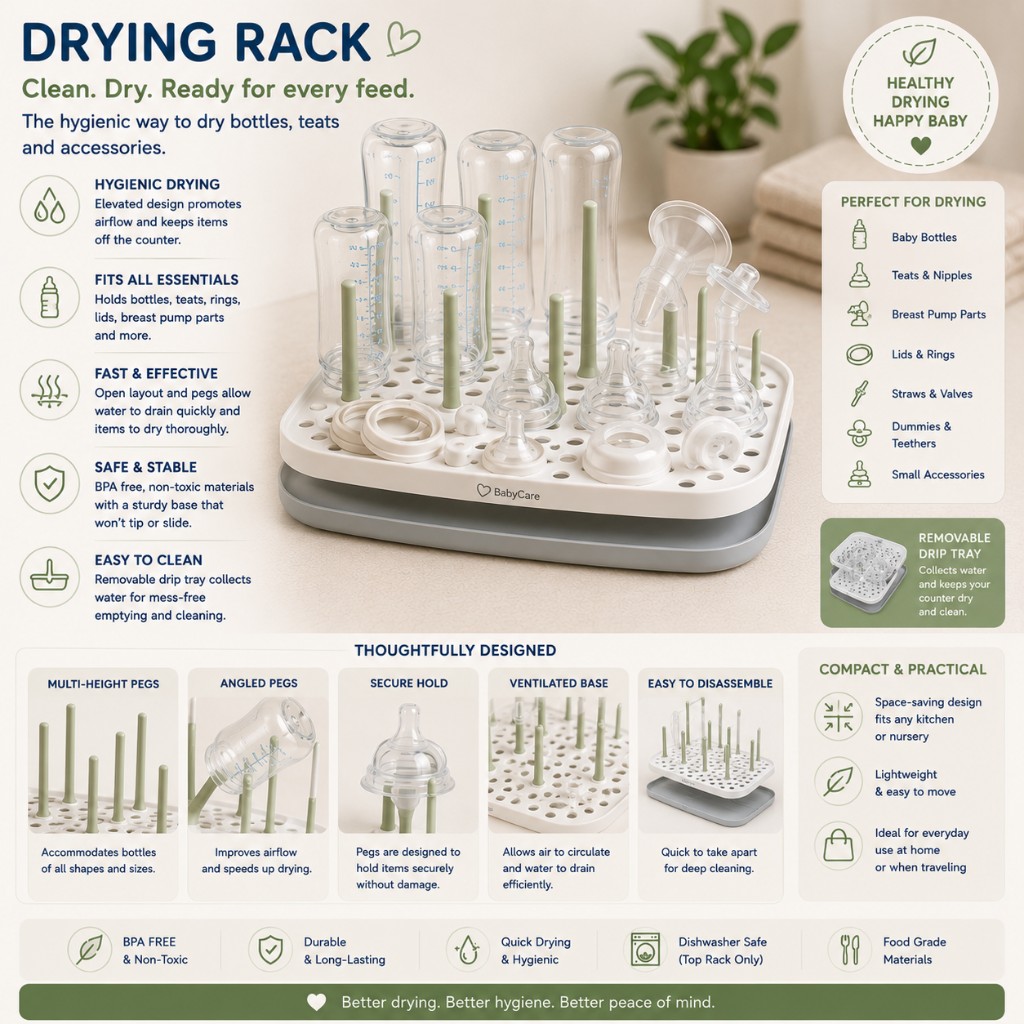
Drying rack for bottles
A dedicated rack keeps washed bottles and parts air-drying hygienically instead of cluttering the kitchen counter.
Typical range: ₹500 – ₹1,800
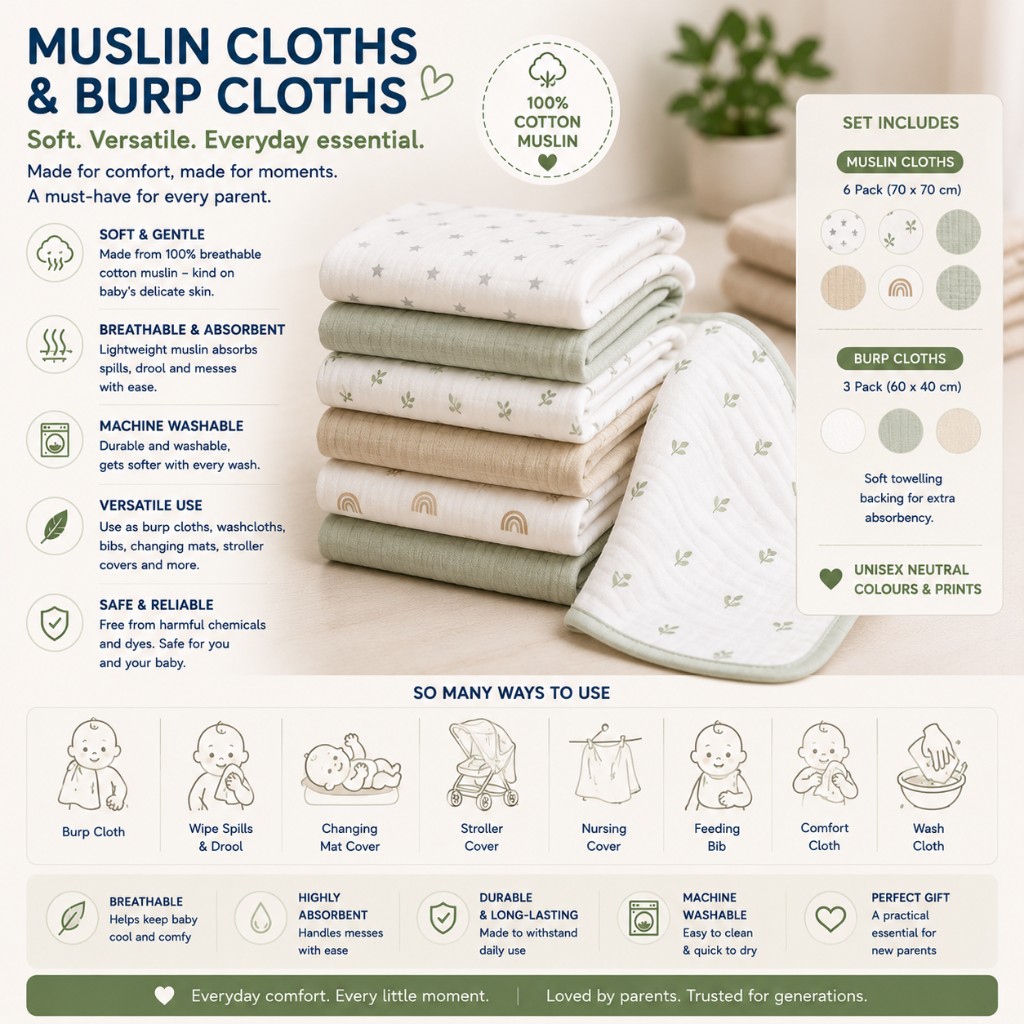
Muslin cloths / burp cloths (pack)
You'll want one over your shoulder at every feed. Soft, washable, and endlessly useful for spit-up and dribbles.
Typical range: ₹400 – ₹1,200
A note on formula
If you use infant formula, choose a stage-appropriate one and always follow the exact mixing instructions on the tin — never dilute or over-concentrate. Your paediatrician can recommend a formula suited to your baby. This is general guidance, not medical advice.
Frequently asked questions
How many baby bottles do I need?
Start with 2–3 and buy more once you know which teat your baby prefers. If you're mainly bottle feeding, 4–6 makes daily washing easier.
Do I need to sterilise baby bottles?
Yes, especially in the early months — sterilise bottles, teats and pump parts after each clean. An electric steam steriliser makes it quick and easy.
What's the safest way to warm a bottle?
Use a bottle warmer or stand the bottle in warm water. Avoid the microwave, which creates hot spots that can burn baby's mouth — always test the temperature before feeding.

General guidance only — always check safety labels and your paediatrician for age-appropriate products.
← Back to all reviewsExplore more on ParentVibes
Continue your journey