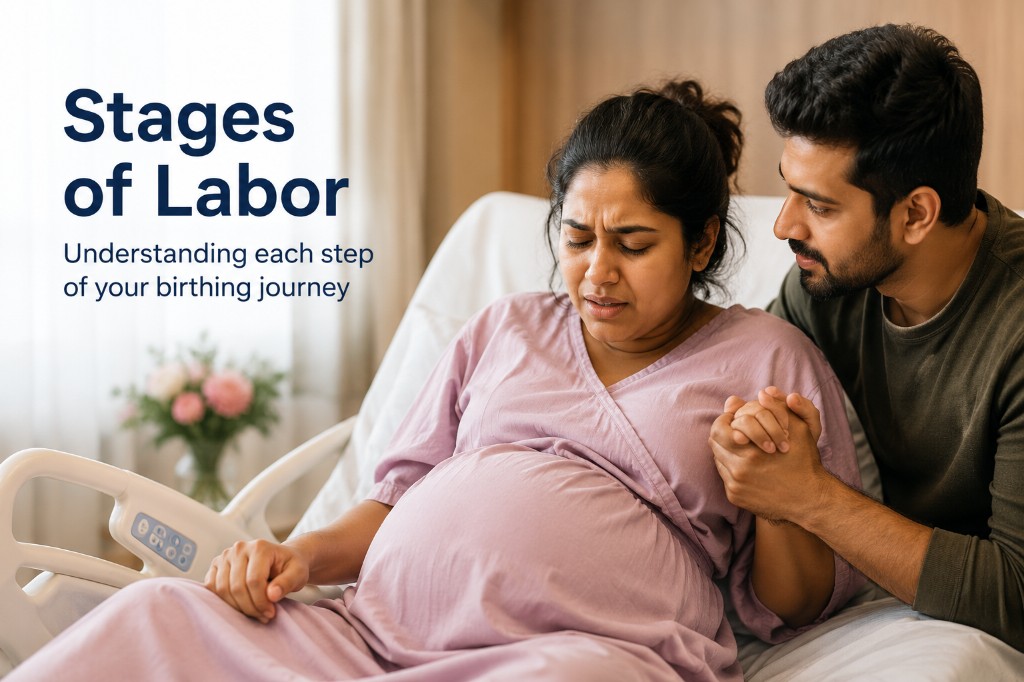
What are the stages of labor?
Going into labor means the finish line is officially in sight. This grand-finale event may bring dramatic twists, surprising turns, and — let's be honest — a fair share of pain and anxiety. Often, there is a sequence of steps known as the stages of labor that take you from those early mild contractions to the incredible moment when you finally meet your baby.
Of course, every labor and delivery can progress differently. Unplanned or emergency cesareans and other surprises can throw the expected progression for a loop. Still, if you are planning a vaginal birth, understanding how things may pace — and what to expect throughout — can help you feel more grounded.
There are three stages of labor and childbirth. Within the first stage, there are additional phases as your body prepares to push baby out. Wondering how long it all lasts from start to finish? Here is what you need to know.
Stages of labor chart
Most providers describe three main stages. The first stage includes three phases: early labor (latent phase), active labor, and transition. During this stage, contractions help your cervix efface (thin) and fully dilate to 10 centimetres.
The second stage is when you push baby out. The third stage — usually the shortest — is delivery of the placenta.
- First stage (latent → active → transition): contractions begin; cervix opens to 10 cm
- Second stage: pushing until baby is born
- Third stage: placenta is delivered — often within 10–30 minutes
- After birth: monitoring, bonding, and recovery in the first hours
First stage of labor
The first stage — including latent, active, and transition phases — starts with regular, consistent contractions and lasts until you begin pushing. It may take a few hours or even a day or two.
Many doctors note this stage can be longer for first-time parents and shorter in later pregnancies. Either way, it tests your mental and physical resolve. What matters is finding support at each point — different positions, a partner or loved one, effective pain relief, or all of the above.
Latent phase of labor (early labor)
Movies rarely get this right. In real life, you may not know the exact second labor begins. Early contractions might feel like lower back pain or come and go unevenly.
False labor often eases with rest and hydration; Braxton Hicks contractions typically fade after an hour or two. True labor continues and intensifies.
As your cervix thins and opens, early contractions are often light enough to talk and walk through. You may notice clear or pinkish discharge — your mucus plug, which sealed the cervix during pregnancy.
Try to relax and keep your mind off discomfort: bath or shower, a book, TV, or a gentle stroll. Sleep if you can — you will want energy saved for later.
Active phase of labor
When contractions intensify and discomfort makes it hard to talk, walk, or get comfortable, you are likely moving into active labor. Contractions every three to five minutes, lasting about a full minute from start to finish, usually signal a more active phase. Active labor often begins around 4–6 cm dilation. If you have not called your doctor or midwife yet, now is the time to ask about heading to hospital or your birth centre.
Your water may break during active labor — a sudden gush or steady trickle, enough to soak clothes or sheets. Move around, sit on a birth ball, or try a warm shower. Breathe, lean on your support person, sip water, and eat small snacks if your provider allows. Digestion is less efficient during labor, and some hospitals restrict food in case a cesarean is needed.
How long does active labor last? It varies. Many people can expect roughly four to eight hours for the cervix to reach close to 10 cm, though timelines differ widely.
- Gastrointestinal upset — diarrhoea or vomiting as baby drops toward the pelvis
- Increased pelvic pressure
- A little bleeding — tell your provider about any blood
- An urge to push — resist until your team advises you to
Transition phase of labor
Pain and pressure peak as you move from about 8 cm to full 10 cm dilation. Contractions may feel stacked on top of each other and last 60–90 seconds.
Without pain medication, transition can have you gripping bed rails and grunting. Exhaustion is common — even with an epidural — and confidence may dip. That is not unusual. This is when support matters most: your partner, doula, nurse, or midwife can remind you that you are close and you can do this.
Focus on your breathing and on meeting your baby soon. To help manage intensity, many people find lower-back massage, counter-pressure, heating pads on the back, and slower breathing helpful.
Second stage of labor
Once fully dilated, you have completed the first stage. Energy may feel depleted, but the work of birth is underway. Welcome to the second stage — delivery of your baby.
If an epidural limits sensation, you may have time to rest before pushing. Your team may reduce some numbness so you can feel pressure and push effectively.
How long pushing lasts depends on baby's size and position, your pelvis, how tired you are, whether you had an epidural, and other factors — from minutes to hours. Burning when baby's head crowns often means a few more pushes will finish the job. The head delivers first, then the rest of the body. Delayed cord clamping may be offered for a healthy start.
Third stage of labor
If all goes well, you may be too busy holding baby to notice the third stage — delivery of the placenta. Most of the time it comes out with little effort within the first 10 minutes after birth.
Contractions at this point are usually mild. Your provider may ask for a push or two and may massage your abdomen to check your uterus — uncomfortable, but brief. Once the placenta is out, many parents feel deep relief. Your team examines the placenta and repairs any tears with stitches if needed.
What happens after labor?
After baby is born and the placenta is delivered, you and baby are typically monitored for the next few hours.
For you, providers watch that your uterus contracts to shrink, bleeding stays manageable, any tears are repaired, breastfeeding gets off to a smooth start if you plan to nurse, and an epidural is removed if you had one.
For baby, the team checks stable breathing and vitals, and may give vitamin K and eye drops according to local guidelines.
How long does labor last?
Timing varies widely based on whether labor started on its own or was induced, prior cesarean history, baby's size, and more.
The first stage can last from a few hours to over 20 hours — early labor often takes the longest. The second stage usually lasts from about 20 minutes to two hours, and may be longer for first-time parents. The third stage often lasts a few minutes up to half an hour.
Every birth tells its own story
First pregnancy: "I noticed a little leaking and lower back pain. That night my water broke while I slept and contractions followed. Water broke at 1 a.m. and I delivered at 5:40 p.m. the same day."
Second pregnancy: "I went into preterm labor, threw up before contractions started, lost my mucus plug, reached hospital at 8 p.m. and gave birth at 3 p.m. the next day."
Fast labor: "Contractions started while I was shopping. I drove home, unpacked groceries, got to hospital — baby born 52 minutes after contractions began."
Your timeline may look nothing like these — and that is okay. Patterns matter more than comparing yourself to anyone else.